



Understanding akhuwat loan eligibility is the most important step before applying for any interest-free loan in Pakistan. Every year, thousands of applicants are rejected not because Akhuwat lacks funds, but because they misunderstand the eligibility criteria, documentation rules, or verification process.
With over 20 years of experience analyzing nonprofit microfinance models and ethical lending systems, I can state clearly that Akhuwat’s eligibility framework is structured, fair, and purpose-driven. This guide explains the complete eligibility requirements, who qualifies, who does not, and how to approach the process correctly in 2025.
What Does Akhuwat Loan Eligibility Mean
The term akhuwat loan eligibility refers to the minimum conditions an applicant must meet to be considered for a Qarz e Hasna, meaning a loan without interest.
Eligibility is not based on credit scores or assets. Instead, Akhuwat evaluates:
- Genuine financial need
- Repayment capacity
- Social responsibility
- Community trust
This approach ensures fairness while protecting the sustainability of the system.
About Akhuwat Foundation and Its Eligibility Philosophy
Akhuwat Foundation operates on principles of brotherhood, dignity, and social justice. Unlike commercial lenders, Akhuwat does not profit from lending.
This philosophy directly shapes akhuwat loan eligibility, making it more human-centered and less transactional.
Basic Akhuwat Loan Eligibility Criteria
Every applicant must meet core eligibility requirements before proceeding.
Primary Eligibility Conditions
- Pakistani citizen
- Valid CNIC
- Age between 18 and 62
- Belonging to a low-income household
- Clear repayment ability
- Willingness to follow ethical repayment rules
Failure to meet any of these conditions usually results in rejection.
Income and Financial Condition Requirements
Akhuwat does not require salary slips or bank statements, but income honesty is critical.
Income Assessment Factors
- Monthly household income
- Number of dependents
- Existing financial obligations
- Stability of income source
The goal of akhuwat loan eligibility is to support those who can repay without hardship.
Guarantor Requirements Explained
Guarantors play a vital role in Akhuwat’s model.
Guarantor Eligibility Rules
- Two guarantors required
- Must be non-family members
- Must have stable income
- Must possess valid CNIC
- Must agree to moral responsibility
Guarantors are not financial sponsors, but community references.
Loan-Type-Specific Eligibility Conditions
Eligibility varies slightly depending on loan purpose.
Family Enterprise Loan Eligibility
- Business idea or existing activity
- Basic understanding of income generation
- Ability to repay from business earnings
Education Loan Eligibility
- Student or guardian must apply
- Proof of educational need
- Reasonable repayment plan
Health Loan Eligibility
- Medical necessity
- Verification through documents
- Emergency or essential treatment
Housing Loan Eligibility
- Ownership or legal possession
- Repair or construction need
- Long-term repayment capability
Each category applies akhuwat loan eligibility rules with contextual flexibility.
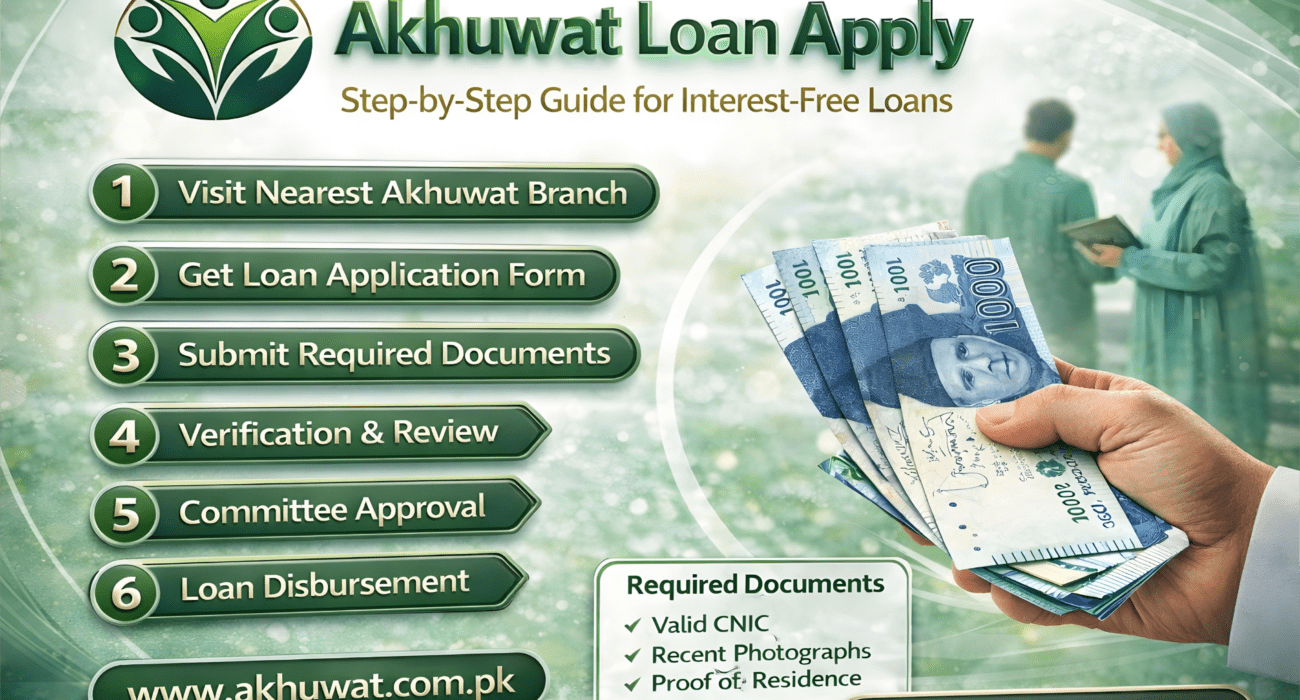
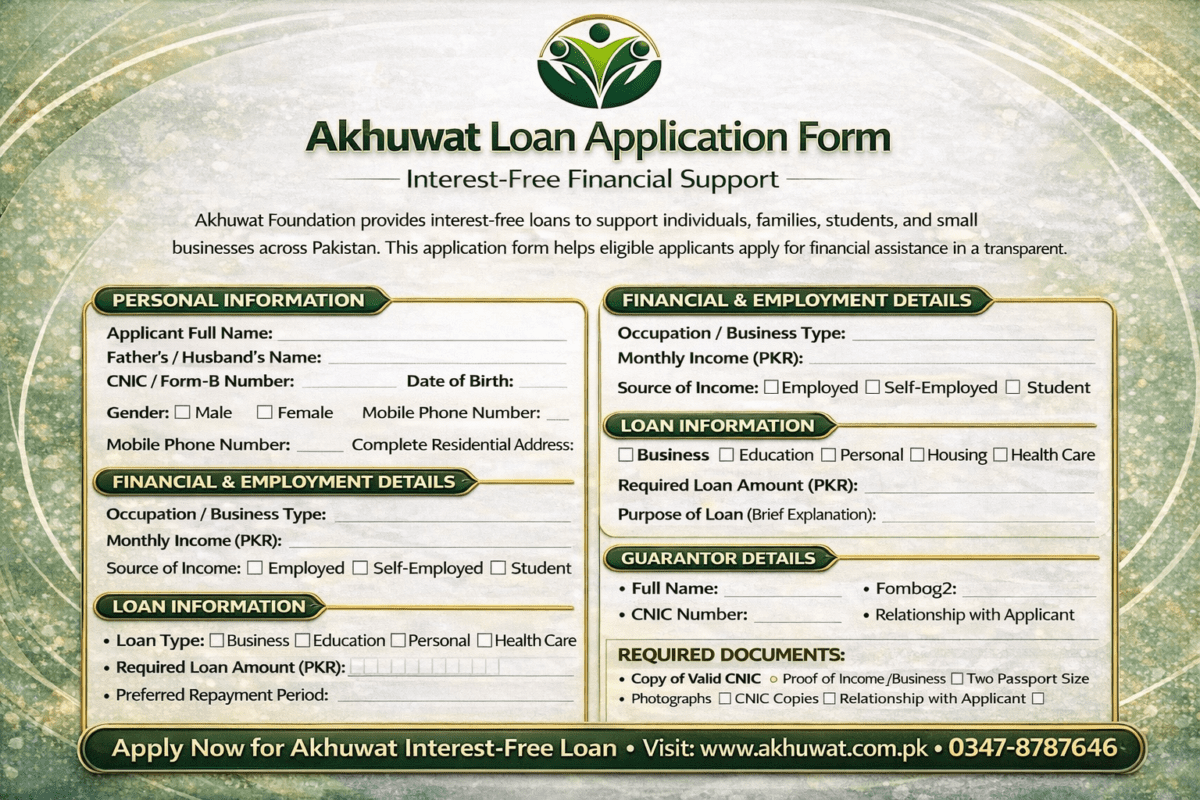
Documents Required to Meet Akhuwat Loan Eligibility
Documentation confirms eligibility claims.
Mandatory Documents
- Original CNIC and copy
- Utility bill for address verification
- Passport-size photographs
- Guarantors’ CNIC copies
- Business or education proof where applicable
Incomplete documents delay or halt the process.
Social Appraisal and Verification Process
A defining feature of akhuwat loan eligibility is social appraisal.
What Social Appraisal Includes
- Household visit
- Community references
- Income validation
- Character assessment
This process replaces traditional credit scoring.
Who Is Not Eligible for Akhuwat Loans
Understanding exclusions saves time.
Common Ineligibility Reasons
- Fake or incomplete CNIC
- Unrealistic loan demand
- Inability to repay
- Unwillingness to provide guarantors
- Attempt to bypass branch process
Eligibility is about responsibility, not desperation.
Age Limits and Repayment Responsibility
Age plays a role in akhuwat loan eligibility.
- Minimum age: 18 years
- Maximum age: 62 years
- Repayment period aligned with age
- Retirement considerations evaluated
These limits ensure responsible lending.
Common Myths About Akhuwat Loan Eligibility
Years of field observation reveal recurring myths.
- Loans are approved online
- Everyone qualifies automatically
- No verification is done
- Large loans are easily available
None of these are true under akhuwat loan eligibility rules.
How to Improve Your Eligibility Chances
Preparation makes a measurable difference.
Practical Tips
- Choose a realistic loan amount
- Be honest about income
- Select reliable guarantors
- Prepare documents in advance
- Attend counseling attentively
These steps align you with Akhuwat’s expectations.
Internal Reference for Applicants
If you are researching akhuwat loan eligibility, use this guide as your internal reference before visiting a branch. Understanding eligibility first prevents disappointment later.
Why Akhuwat’s Eligibility Model Works
Akhuwat’s success is built on:
- Trust-based assessment
- Community accountability
- Zero interest pressure
- Human judgment
This model sustains both borrowers and the institution.
Final Conclusion
Akhuwat loan eligibility is not complicated, but it is disciplined. It rewards honesty, preparation, and responsibility rather than shortcuts or influence. Applicants who understand the criteria, meet the requirements, and respect the process significantly improve their chances of approval.
In ethical microfinance, eligibility is not a barrier; it is a safeguard. Understanding it fully is the first step toward accessing interest-free financial support with dignity and confidence.